19.1.09

U2 - Get on Your Boots


Did you manage to recover after seeing that picture? OK, here we go...


A review of U2's new single, which you can listen here: http://goyb.u2.com/

(P.S. the review includes a secret mini-review of Filthy Theatre's even more Secret Name).


There's a new U2 song on the radio right now, which is the lead single from their long-awaited new record No Line on the Horizon. Like some other tracks from the album, it bears a ridiculous title, namely Get On Your Boots. Whatever that is supposed to mean.

I've grown to be quite critical of U2's last two albums, for their lack of cohesion, innovation and most importantly – unlike the 90's gems Zooropa and Pop, they didn't stand the test of time at all. There are simply too much sugary poppy songs on there that are likeable to the ear the first couple of times, but they fail to convey much interest after some years pass by. I mean, I still like those albums, but I don't have the desire to hear them more often. No Line on the Horizon is being announced as U2's bold return to experimentation and innovation, reminiscent of their fabulous work in the 90's – I can definitely see what they were talking about when I hear Get on Your Boots – it's too bad that, while production went one way (credit to Brian Eno and Daniel Lanois, who are without a doubt the producers U2 are most comfortable and compatible with), the songwriting stayed put, in the sense of that Get On Your Boots, despite trying hard, fails to escape from that „silly pop song“ vibe of songs like Vertigo (a tolerable studio song, a very fun live track) and Elevation (the less I say about this, the better). The similarities to Vertigo are undeniable – from Bono's scat singing in the verses, the repetitive guitar riff, to a weak climax where the main riff is repeated over and over again (with Bono saying some inevitable „yeahs“ on the way; at least there are like 10 „yeahs“ less than in Vertigo). There are some interesting sounds in there that do make me cautiously optimistic about the new album – the Eastern feel of the „how beautiful you are“ chorus is easily the highlight of the song, although it could have benefited from a better lyric. The nuanced production that includes some weird electronic sounds and layered percussion is interesting and I can't wait to see it applied to some better songs on the record (and thankfully, I can tell first-hand that there will be some better songs on it). The lyrics are at first sight completely non-sensical, a combination of war images and Bono's awfully cheesy one-liners (I can think only of Elevation's infamous „a mole digging in a hole“ being worse than „sexy boots“, which is the main chorus line in this song). Hell, there's even a rap-like bridge that has a powerful drum beat suspiciously similar to Led Zeppelin's famous When the Levee Breaks and I'm still not sure if it sounds OK or completely shitty. Time will tell.

This is probably, along with 1993's Numb, the most underwhelming single U2 ever released. I do remain a bit excited about the new U2 album, but the thing that interests me the most are the tour and the concerts – U2 are still unbeatable in this section, as the recent U2 3D (reviewed below) showed. Let's hope I'll be cheerful enough to cry out „sexy boots“ on the concert without feeling dirty. It worked alright with the „whoo-hoos“ in Vienna in 2005 when they were playing everybody's favourite song.

More music-related articles will appear soon. Millions of my readers can't wait to read them.

P.S. For a 30-year old band who has Bono as their lead singer, it could have been much, much, much worse - they could have made a rocking climax where the vocals are hysterically shouting and spelling guitar player's „secret name“. I guess some lows will never be matched. For that master-piece check out this link: http://www.youtube.com/watch?v=K7UpMCUzyMw


6.1.09

Burn After Reading (2008)

Written and directed by: Joel and Ethan Coen

Starring: George Clooney, Frances McDormand, John Malkovich, Tilda Swinton, Brad Pitt, David Rasche, J.K.Simmons


The most respectable pair of siblings working in Hollywood are at it again in creating something unexpected and preposterous – Burn After Reading is a film that will hardly be on the “best of Coen brothers” lists, it will probably leave most of the audience in WTF mode after watching it, but you can’t deny that the Coens are having lots of fun with this one. Especially after the darkness and hopelessness of their last masterpiece No Country For Old Men, the Coens decided to take a left-turn and offer us something that is light, so “light” that is completely and utterly pointless, which they whole-heartedly admit in the film’s finale.

First and foremost, Burn After Reading makes fun of everything. It mocks itself, it mocks the Coens, it mocks the “beautiful” Hollywood stardome (Clooney and Pitt do a bold move by creating two moronic, but entertaining characters that are the opposite of the majority they have done in the past), it mocks our fears and paranoia of thinking everybody is watching us, but it especially takes a jab at the oh-so-serious Tom Clancy or Robert Ludlum spy thrillers. There is dramatic “action” music (courtesy of Coens’ long-time collaborator Carter Burwell) while nothing is happening, there is a ridiculous CIA-related plotline where nobody of the intelligence operatives seems to give a shit, a shocking twist where it seems that the film will get into higher gear, but it just returns into its general slow-paced mood. The obligatory political subplot is simplified and full of caricatures, while it ultimately leads to an anti-climactic resolution. You want tension like you get in the Bourne or Jack Ryan movies? Burn After Reading has none.

All of this doesn’t necessarily mean that the film completely works in this context. What it does lack is the good old memorable dialogue and black humour that was the milestone of the previous Coen comedies (The Big Lebowski being the primary example). I laughed maybe once, smirked a couple of times, but the entertainment aspect of the film left me wanting more. Sure, both Clooney and Pitt give very good performances (Pitt will surely get a lot of attention for playing a goofy, naïve and utterly limited fitness instructor), but John Malkovich is too over-the-top and phony and not the least memorable as he can be. It probably has more to do with the material he was given. Same goes for Tilda Swinton, while Frances McDormand, although creating a character that’s probably the most human of them all, goes into silly mode more than a few times. David Rasche, better known as Sledge Hammer, makes a great pair with the always reliable J.K. Simmons, in one of the highlights of the film. In the end, a solid black comedy with some great performances, but not even close to being one of the more memorable and impressive Coen efforts, but when you look at it - wasn’t that the point?

The Godfather Trilogy


The Godfather (1972)

Directed by: Francis Ford Coppola
Written by: Mario Puzo & Francis Ford Coppola

Starring: Al Pacino, Marlon Brando, Robert Duvall, James Caan, Diane Keaton, John Cazale, Richard Castellano, Talia Shire, Al Lettieri, Sterling Hayden, John Marley


I'm not going to try and be original when it comes to The Godfather. A film that has been analysed, researched, quoted and reviewed a million times, where every guy that's into film is well aware that it simply is one of the greatest achievements of American cinema. Everything clicked in that first film, it was like a perfectly solved puzzle, guided by Francis Ford Coppola's safe hand. It is interesting to take a look at the supplements that are included in the new Coppola Restoration package; the making of the first film was plagued with plenty of highly controversial and almost illfated studio tactics – not as bad as the aforementioned making of Apocalypse Now, Coppola's other masterpiece, but still... to find out that Coppola was followed all the time by his possible replacement on the set who would have taken over as soon as the studio spies recognized a single mistake of his, to know that Al Pacino, easily in one of the greatest acting transformations in the history of cinema, was an hour close to getting fired as well, because the studio was always sceptic at his choice (the famous actor was not well-known at the time, Paramount wanted a more „photogenic“ actor like Robert Redford or Ryan O'Neal... ugh), to know that the studio's representatives were disgusted by Coppola's proposal that Marlon Brando should take the title role, stating personal reasons as the main motive. Brando was never popular among the studio bigshots; Paramount executives stated that he would never get this role, which is probably his most legendary performance, that gave him his second Oscar, which he controversially refused, sending an Indian female activist to the ceremony to refuse the reward, where she read a speech that flamed the Hollywood system which at the time belittled Native Americans in all those westerns. Brando didn't even bother to show up. All this is another proof where you rarely make a masterpiece where everything goes beautifully well – maybe we should thank all those bloody suits for giving Coppola the energy and the audacity to come up with something like this.

With The Godfather, it's all about the performances. Should we begin with Brando's unforgettable turn as Don Vito Corleone, that is unique, immensely fun and heart-breaking at the same time? That was one of Coppola's biggest advantages – to make a larger-than-life mobster so amazingly sympathetic that the viewer can easily connect with this person. Coppola himself said that he wasn't making a gangster film, but a film about the rise and fall of a family. Who could disagree with one of many legendary lines from Vito when he states that any man who doesn't spend time with his family can never be a real man? All these characters are stunningly layered and three-dimensional, that you will be surprised when you start to sympathize with them.

Nothing is more true in that aspect than James Caan's energetic and hilariously over-the-top (this time in a good way) performance as the wild-tempered son. Santino Corleone is a violent, aggressive prick who orders a hit without taking any consideration, openly cheats on his wife and doesn't have any sense of control, but Caan's performance, especially in those small moments where you can see the feeling of respect and protectiveness he has for his family (especially his sister), turns him into a character you actually root for. And the fact that he is easily the „coolest“ character in the saga.

Robert Duvall has the ungrateful role of the subtle and not too flashy character of Tom Hagen. His performance is just as good as the others, as a person who stays in the background, but has the difficult task of consulting and keeping things steady in a mob war that's going on. Duvall does an admirable job in creating a character that is perhaps the most harmless member of the family, giving him the necessary charisma and a sense of realism in a world full of bigshot characters, like Richard Castellano's great Clemenza („Leave the gun. Take the cannoli.“), or Al Letteiri's extremely genuine and menacing depiction of one of prinicipal antagonists in the film, Virgil Sollozzo.

Still, despite all these, for me is The Godfather saga all about Al Pacino's performance as Michael Corleone. Pacino has surely made dozens of roles that make him the legend that he is, but in my opinion, he never matched this performance. All those Pacino fans that criticize the too over-the-top approach he does in the second half of his career, should definitely feel satisfied when they see the persuasive, albeit very quiet and downplaying way Pacino makes this character work. From the innocence and the heroic stature of the first half of the film, to the quiet and soothing menace of the second half, Michael Corleone's transformation from an honorable and modest war hero who doesn't want anything to do with the „family business“, to a lying, manipulating and merciless gangster is simply art. Oh, and he didn't get an Oscar for it. Figures.

Francis Ford Coppola's direction is another one for the books. Who can count all the perfectly directed sequences in the first film only, starting from the amazing attention to detail he gives to the documentary-like opening wedding sequence, the „I believe in America“ opening scene, the way his camera stays put on a single character for a longer period of time (which puts that new fast-cutting Hollywood style to shame – carefully analyze the key Pacino „transformation“ scenes, how the camera calmly stays put on his face), his sense of pacing, his care of depicting the 40's era, the cross-cutting (so often imitated) baptism scene, or the simple, but perfect „closing door“ metaphor ending? And you can't get all those performances without careful direction, which really makes me puzzled, since it is surprising how many later Coppola films are plagued with bad acting. Kudos to Coppola for insisting that the opening credit states Mario Puzo's The Godfather, since without Puzo, the author of The Godfather book and the film's co-writer, these characters would never exist and the memorable dialogue could not be quoted or parodied millions of times. The score, composed by Nino Rota and conducted by Coppola's father, Carmine Coppola, is classic stuff of course.

Since I'm running out of positive adjectives, I'll put out my only bigger nitpick I have with the film. The Sicily section in the film is a bit too drawn-out for my taste and hurts the pacing. Otherwise, this is as close to perfection as it gets, folks. Watch it as much as you can, further viewings only make it better. Onto Part II.


The Godfather Part II (1974)

Directed by: Francis Ford Coppola
Written by: Mario Puzo & Francis Ford Coppola
Starring: Al Pacino, Robert DeNiro, Robert Duvall, Diane Keaton, John Cazale, Lee Strasberg


When film fans start to discuss The Godfather saga, it often begins with a simple question – does one prefer the first film or the second one, easily the greatest sequel (and prequel) ever made. Calling The Godfather Part II a „sequel“ even belittles it in a way, since that expression is associated too much with the popcorn film – Part II is simply a logical continuation and an improvement on the story and its characters.

I'll put it out immediately in the open – this is my favourite film in the saga, for many reasons, but first and foremost it is Al Pacino's incredible performance that makes it an absolute classic in my eyes. This is a darker and more emotional film than its predecessor; whereas The Godfather had a couple of lighter and funnier moments, Part II is a bleak and pessimistic exploration of a corrupted man so lost in his hypocrisy and paranoia, that he completely loses any sense of reason or sane judgement. The Godfather was just the beginning of Michael Corleone's tragedy, Part II is the climax of his downfall – in the end, he becomes a horiffying personality, a black shadow of his former self.

As Steven Spielberg accurately stated, Part II is a pure Francis Ford Coppola feature, even moreso than the first film. The unusual way of narration, which tells two parallel stories set in two different time periods (one of Pacino's Michael in the 1950's and the other one of a young Vito Corleone in the 20's, played by Robert DeNiro), proved to be highly risky. There are some critics even today who disprove this controversial approach, but it works. Coppola's sense of pacing is brought to perfection here – the viewer is able to connect with both stories, they are cross-cut very carefully and they both offer unforgettable moments.

The young Vito section of the film is from a visual perspective a joy to behold – the scenography and the photography of the 1920 era Little Italy is startling and extremely authentic. Coppola's maniacal attention to detail has proved worthwile once more. Robert DeNiro's performance joins the pantheon of The Godfather's flawless performances, giving Marlon Brando a run for his money, interpreting the same character, making him as layered and charismatic as Brando made him in the first film. DeNiro's infamous perfectionism shows its side here as well – although he makes nods to Brando a couple of times, reminding us that he is playing the same character, his performance is anything but a pure imitation. DeNiro makes Vito his own and gives him another angle that makes the character even more interesting. Not to mention the fact that about 95% of his lines are in Italian. The cruel, but somehow hilarious Don Fanucci, the antagonist of this piece, deserves a mention, along with Bruno Kirby doing a great young Clemenza as well. If you're wondering why the older version of the character is not here; actor Richard Castellano had one request too many for Coppola (he allegedly wanted to write his own dialogue), so the older Clemenza was deleted in the final draft of the script.

The script, written by Mario Puzo and Coppola, is this time based only partially on Puzo's original novel. The majority of Pacino's story was made for the film, but it hardly feels tacked on. Michael's intriguing plot offers plenty of unexpected twists and turns and it stays tense – there are no awkward slow intermissions like the overlong Sicily section in the first film. I especially enjoyed the Cuban Revolution angle, the Hyman Roth character, played by Lee Strasberg, but the highlight and the centerpiece not just of this story, but of the film and maybe even the whole saga, is the relationship between Michael and his older brother Fredo, wonderfully played by the late John Cazale.

I delibaretly didn't mention Cazale in my review of the first film. He had a small, but effective role in that one, as the black sheep of the family, the inferior brother and son. The Fredo character has a much more important role the second time around and Cazale definitely does not disappoint. It is a vulnerable and painfully real performance, easily the most underrated of them all in the series. In three of the key scenes with Pacino and Cazale together, you understand why Pacino named Cazale „his acting partner“ – their unique chemistry are the heart and soul of the film and offer one of the most emotional sequences in any of the two parts. Robert Duvall is again great as Tom Hagen, although I wish he had more to do in this one. Diane Keaton has a smaller role in this one as well, but she does her job well, despite an awkward line here and there.

The final minutes of Part II present an ending where Francis Ford Coppola's genius comes into the forefront; while we're watching in disbelief Michael's ultimate sin, Coppola does the unthinkable – he brings us back into the past, directing a family reunion scene, 5 minutes of pure perfection. All the other characters from the first film (excluding Marlon Brando, who couldn't go past his conflict with the Paramount studio) are back and we're watching a surprise birthday party unfold. There's James Caan, who in less than 5 minutes of screentime gives a performance that is as good as any classic scene of his in the first film, if not better, but most importanly – there's that other Pacino, from the first half of The Godfather, playing the young and innocent Michael once again. It's the subtlety and the emotion of the ending that bring the story full circle in a deeply moving way; Coppola uses (again) simple metaphor, beautiful photography and maybe even most importantly silence, to express and illustrate Michael's piece of mind in those final moments. This is a cold and insensitive man who has gained everything to feed his sick ambitions, but lost everything he held dearly. When we see him in that final shot (inspired by Bernardo Bertolluci's The Conformist), the expression on his face reveals everything he has in his life – absolutely nothing. And so the story perfectly ends. Oh, except it has that other infamous sequel.


The Godfather Part III (1990)

Directed by: Francis Ford Coppola
Written by: Mario Puzo & Francis Ford Coppola
Starring: Al Pacino, Diane Keaton, Andy Garcia, Sofia Coppola, Eli Wallach, Joe Mantegna, Talia Shire, George Hamilton

To quote Al Pacino’s Michael Corleone in one of the typically over-the-top Part III scenes: “IT WAS NOT WHAT I WANTED!!!”. That line of dialogue perfectly sums up my feelings about the second sequel to The Godfather: unnecessary. There was this review on the Internet I’ve found about the new Coppola Restoration package (which contains all three films plus two discs of bonus features), where the reviewer was particularly brutal towards this movie. He brags on and on about the first two films and the third one is not even mentioned - except in one sentence, that is cunningly hidden in the “bonus features” section, where the writer is “suddenly” reminded that there is one more bonus feature in the package called The Godfather Part III, if somebody wants to see that. Unlike some haters, I don’t think Part III is a bad film, but it is a deeply flawed, painfully mediocre effort, plagued by bad acting, a dull and unoriginal script and uneven pacing. On the other hand, there is a relative minority of Part III defenders who claim that this film had a difficult burden to match the previous two masterpieces and for that it is impossible for it to stand on its own. I’ll do my best and try to minimize the comparisons of Part III to its two predecessors.

The main problem with that argument lies in the fact that Puzo and Coppola made a storyline that mirrors the first part in its narrative to an extent, that practically half of the film has that déjà vu feeling. There’s an assassination attempt on the don, a hidden villain who pulls all the strings, a new Godfather at the end, a Sicily section, tons of flashbacks to the first two parts etc. Despite a potentially intriguing Vatican plot, that becomes muddled and confusing halfway, there is hardly anything original plot-wise about Part III.

A lot has been said about Sofia Coppola, who plays Mary Corleone. The director was accused of nepotism at the time of the film’s release, by which much of the criticism was laid on his daughter’s back. I can’t say it isn’t justifiable – the godawful infamous “Dad?” in the climax is only one of young daughter’s missteps (plus the fact she’s as wooden as a bloody oak), but the fact that at least three of the lead or supporting actors aren’t too far behind isn’t mentioned that often. Andy Garcia tries real hard, I’ll give him that. But man, does he love to go as over-the-top as possible (“I say WE TAKE ZASA OUT!”), creating a central character that’s for the first time in The Godfather saga pretty unsympathetic and shallow. Take the last scene for instance, which should have been the most emotional and heart-breaking of the lot. I laughed. During this tragedy I couldn’t stop laughing, mostly because of Andy Garcia’s final line in the film. Check out this hilarious video: http://www.youtube.com/watch?v=u3-0y8XkaVM&feature=related, that puts some things I’ve said into context.

The antagonists in the film are played by Joe Mantegna and Eli Wallach. Mantegna’s performance as Joey Zasa does make a true effort to make his character seem like a complete caricature. Eli Wallach doesn’t fare much better – this was a case of serious miscasting, because the famous Tuco from The Good, the Bad and the Ugly does not make a believable back-stabbing mob boss. Speaking of miscasting, George Hamilton? I remember that guy from a certain American soap opera that aired on the television 10 years ago. I don’t know what was Coppola thinking when he cast him as a replacement character for Robert Duvall, who refused to appear, because of the salary difference between him and Pacino. Speaking of the main star, Pacino is miles better than any other performer in the film, but somehow his performance does seem a bit hammy (foreshadowing the over-the-top approach of his later career), even unnatural at times, particularly because this character has very little similarity with the Michael Corleone of the first two films. Pacino later stated – which I fully agree with him – that the whole redemption scenario simply wasn’t the right choice for a character like Michael. His journey truly ended at the end of the second film. The final scene of The Godfather Part III, where we say goodbye to the character, is done so lazy and poorly, that the total impression of the film really goes into abyss after the final two sloppily made “emotional” scenes. Diane Keaton has to bare some truly awful lines (“And then you became my horror!”) and her delivery, as much as she tries, only makes things worse.

Francis Ford Coppola officially bankrupted while making a modern musical One from the Heart, and that was his first film after the infamous Apocalypse Now, where Coppola created a masterpiece, but probably lost his sanity in the process of making it. There isn’t any Coppola work post-Apocalypse Now that is a great film, let alone one that matches his work from the 70’s. He intentionally made films based on subpar stories to cover up his debts and somehow his incredible instinct for getting a great performance, memorable dialogue or perfect sense of pacing went away with it. As the always honest and open Coppola admits, The Godfather Part III was made out of interest, not from the heart. And the whole film reeks of this. Don’t get me wrong – it’s still a film worth checking out; there are some interesting visuals and intense, emotional scenes (Michael’s confession, his heart attack) and if you compare The Godfather Part III to any other average gangster movie, it does stand above it. Recommended, but with reservations.

30.11.08

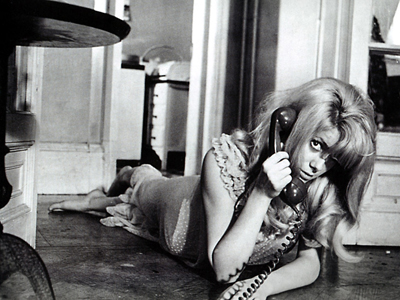
Repulsion (1965)

Repulsion (1965)

Directed by: Roman Polanski
Written by: Roman Polanski and Gerard Brach
Starring: Catherine Deneuve, Ian Hendry, John Fraser, Yvonne Furneaux, Patrick Wymark


I'll start reviewing a couple of Polanski features, who is rapidly becoming one of my favourite directors, since Repulsion, his first feature on English language and the last one I've seen as of now, is another win for this great artist (I'll leave his much publicized and inevitably discussed personal life aside).

Repulsion is Polanski's first part of his famous (unofficial) "Apartment trilogy" (together with Rosemary's Baby and The Tenant) and I'm definitely not disappointed. Although the uniquely bizarre and grotesque nature of The Tenant still makes it my favourite Polanski feature, Repulsion is probably his creepiest and most disturbing movie, featuring a great performance by Catherine Deneuve, in the role of a mysterious, tormented and paranoid woman, who faces a downward spiral all alone in a creepy apartment, where the majority of the plot is taking place.

The apartment has a sinister presence in Repulsion - Polanski uses lightning and shadow contrasts along with creepy camera angles and brief visual shocks to create an atmosphere that is mirroring the state of mind of the main character (along with the infamous shot of the raw decaying rabbit and the razor next to it). Repulsion, like plenty of films in Polanski's filmography, is a horror movie as much as it is a psychological thriller, that doesn't depend on cheap scares or gore to be truly unsettling. There is at least one scene in it that would make you shake - the tension in this one, which is the trademark in almost every single Polanski picture - is practically unbearable. Although the pacing could have done a little more work -
just how many scenes of Deneuve walking around London does one need?

Deneuve is admirably believable in a performance that could have easily turned out hammy and unnatural. Her vulnerable and subtle approach makes her character unusually sympathetic, even in the movie's most critical and gruesome moments.

Spoilers in the next two paragraphs:

Unlike the often compared The Tenant, Repulsion is relatively easy to understand and it's probably not as open-to-interpretation as the former Polanski masterpiece, or even Rosemary's Baby - a couple of SPOILERS ahead -
I guessed the reason of Deneuve's anti-social behaviour, repulsion towards men and the vulnerable dependence to her sister relatively early in the film; the continuous focus of the family photographs kinda gave it away. Still, the final subtle shot in the film of Carole's frightening look pointed at her father is a brilliant way to unravel the mystery. But there are many more hidden meanings and metaphors than this twist - the hands in the hallway and the constant cracking of the walls is an ingenious way to depict Carole's sexual repression and lust, which is one of the reasons she isolates herself in the apartment.

Despite a couple of contrivances in the plot and some hardly believable moments (SPOILER - such as the killing of her possible boyfriend - just how does a weak and undernourished woman kill a much stronger person so easily, with one punch, no less than using a candle holder?) and the aforementioned pacing problems, Repulsion definitely presents one of Polanski's greater works - and there are plenty of them, believe me.


14.10.08

Les Diaboliques (1954)

Les Diaboliques (1954)

Directed by: Henri-Georges Clouzot
Written by: Pierre Boileau, Thomas Narcejac
Starring: Vera Clouzot, Simone Signoret, Paul Meurisse, Charles Vanel


I have recently seen the 1953 French classic Le Salaire de la peur (a.k.a. Wages of Fear) by Henri-Georges Clouzot and it was certainly a great film, although I did have some issues with it. What was the most interesting aspect of that film is the amazing care Clouzot dedicated to tension and suspense, one that has been rarely matched, if only by a certain bald British „master of suspense“. The comparisons with Hitchcock do not end there, because Les Diaboliques, Clouzot's 1954 follow-up to Le Salaire de la peur, is a wonderful thriller that is as good as anything Hitchcock ever did. It is interesting to note that the film was based on a novel called Celle Qui N'Etait Plus by two French writers, Pierre Boileau and Thomas Narcejac, who wrote the script as well. Their second novel, D'entre les morts, was adapted by Alfred Hitchcock himself, into his masterpiece Vertigo.

I can bluntly say that some of the scenes in Les Diaboliques belong in movie history. Clouzot is practically a perfect director when it comes to creating suspense and a feeling of fright. First of all, there is no music involved. This has been a formula that many great filmmakers had done and it works superbly. Second of all, it is not the point in how much you can see, but how much you cannot. In one of the final scenes, Clouzot masterfully keeps the viewer on the edge of his seat, while focusing the direction on the sound of screeching doors or a typewriter, giving hardly any visual scares like in all those cheap Hollywood horror films. As much as it is a thriller, Les Diaboliques can be viewed as a horror film as well – the atmosphere is genuinely creepy, largely thanks to the cinematography (the film is shot in black-and-white), that is another little wonder to behold – you'll be amazed at what Clouzot can do with a simple shot of a dark hallway or a shadow contrasting the light behind it.

The performances vary from great (famous French actress Simone Signoret delivering as the cunning mistress and Paul Meurisse playing a great villain) to solid (Vera Clouzot, the central character, playing the molested wife gives a very solid performance, but sometimes hams it up a little in a couple of key scenes). The less you know about the story, the better. There is even an anti-spoiler message after the enigmatic open-to-interpretation ending (something I really love – it's a film where the viewer not only keeps guessing, but is allowed to have his own interpretations about it), that instructs the viewer not to tell a single thing about the film's plot to others. So, I'm keeping my mouth shut. Go and see it.


5.10.08

Youth Without Youth (2007)

Written and directed by: Francis Ford Coppola
Starring: Tim Roth, Alexandra Maria Lara, Bruno Ganz, Marcel Iures, Andre Hennicke


Francis Ford Coppola's first film after 10 years is, next to David Lynch, the most European film made by an American filmmaker that I've seen in a while. It is an ambitious effort that has plenty of its shortcomings, but overall, it is definitely the most interesting piece of work Coppola has made in 20 years or more.

The film was pretty much ravished in America, but it did find its ground among the European public. This is completely understandable, since Youth Without Youth inhabits a distinct European style, in terms of story (Coppola wrote the screenplay, but the original story comes from Romanian writer Marcia Eliade's novella that bears the same name as the film), pacing and cinematography (truly beautiful piece of work by Mihai Malaimare Jr.). Even the film's dialogue is quite often dubbed, which gives it a feeling of earlier Italian cinema. The comparisons don't end there – similarities with Fellini (the dreamy, gloomy atmosphere), or Tarkovsky (the metaphysical and philosophical themes) and the aforementioned Lynch (themes of duality, dreams and the overall open-to-intepretation storyline) are for sure not coincidental. Therefore, knowing my experience from these directors, it is perhaps a mistake to review this feature after only one viewing, but on the other hand, it will be interesting how this one stands the test of time.

Coppola rarely did something similar to this, which is commendable, but this film isn't nearly as wonderful as his best work from the 70's, or the finest pieces of the aforementioned great filmmakers. The film is messy, trying to encompass far too many themes, but hardly giving any kind of interesting conclusion to the questions posed, involving immortality, reincarnation, aftermath of a nuclear holocaust or the origin of language. This was maybe even intentional on Coppola's side, since the film is basically a love story, between the main protagonists, Tim Roth's Romanian linguistic Dominic Matei, a 70-year old who after being struck by a lightning, „de-ages“ 30 years and does not seem to get any bit older afterwards, and Alexandra Maria Lara's Veronica/Laura, who is possessed by her past-life incarnations. Tim Roth does an admirable job in creating a complex and tortured character; I especially consider his alter-ego, that Dominic develops during the film, very entertaining and menacing in a subtle way. Roth does try his best with the dialogue that does get unnatural in many of the film's scenes and definitely presents one of the best things about the film. Alexandra Maria Lara is not too far behind, although her section of the film is definitely the weakest one. The Nazi storyline, or the first act of the film, ends in a quite sudden and contrived way, shifting the perspective to Lara's character in the second half, where the pacing gets problematic and the plot becomes too convoluted. Unfortunately, there is hardly any emotional resonance to the Dominic/Veronica relationship. As soon as the film gets back to Romania in the final act, it does pick up, offering an enigmatic ending that simply begs for a second viewing. A performance that didn't work at all is the one by the great Bruno Ganz, who plays Dominic's doctor, stating awkward and painfully obvious lines (again, not his fault alone – Coppola didn't do that great this time as a screenwriter). There is even an amusing Matt Damon cameo in there, who worked with Coppola on 1997's The Rainmaker.

On the positive side, the film is shot beautifully on locations all around Europe. The dark and sinister atmosphere, perfected through stunning cinematography and haunting Osvaldo Golijov's musical score is easily my favorite thing about the film. It's a shame Tim Roth didn't get many praises for his performance, that is some of the best things he's ever done (the bloke did some great character work in the 90's). Coppola's latest accomplishment turned out to be the case where the style prevailed over the substance, which is not necessarily a bad thing, but in this case, one of the best American directors in his own time did leave me wanting more.

29.9.08

U2 3D (2008)


One of the finest live bands around gives us a unique cinematic and musical experience, where the famous energy and the atmosphere of a great U2 concert is almost tangible. Shot with IMAX 3D cameras, this ingenious effort is perfectly realized and executed, in form of a 85-minute 3D concert film, shot in the course of 2 weeks at a dozen concerts all around Latin America in 2006, during the Vertigo tour, which supported their last studio album How To Dismantle an Atomic Bomb.

The band has wisely chosen the Latin American concerts, especially the ones in Buenos Aires, to be the place where the 3D film should be shot, because frankly, those crazy Argentinians are the best concert audience in the world. As Eddie Vedder had put it at a Pearl Jam concert in Buenos Aires in 2005: „I mean, no one sings the guitar parts, for Christ's sake!“. The atmosphere is very similar in this film – the performance of Where the Streets Have No Name is the closest that a concert film had got to experience the energy when that song is played. The audience is jumping and singing their hearts out, Adam Clayton coming out of the screen to steal my 3D goggles, Edge chiming that famous guitar riff and of course, everyone's favorite/most hated frontman, Paul Hewson, jumping around like he's still 20 years old. The moment where the audience comes in with the ooohs in With or Without You will give you goosebumps, I guarantee it.

U2's performance is flawless, apart from a priceless The Fly intro, where The Edge can't get that bloody guitar to work („I don't know how this thing is working!“), with Bono frequently asking „Where is the fly?“. I love these kinds of mistakes because they make the untouchable rock stars more human and it adds to the overall entertainment. Bono's voice is spot-on (it wasn't as great at the 2nd Buenos Aires concert where the majority of the footage was filmed, the concert was almost cancelled; the band had shot another performance in front of an empty stadium a couple of days back), The Edge holds nothing back with some great guitar work on New Year's Day, Bullet the Blue Sky or The Fly, Larry Mullen is his usual cold-blooded self, but the biggest surprise of the film (and the tour in general) is a playful and energetic Adam Clayton, who moves more than The Edge in the film, finally playing and looking very entertained at the same time. Bono is his usual self – either you love the guy or you hate his guts; you can categorize some of his movements, dances or speeches downright cheesy or preposterous (like him singing Luciano Pavarotti's part in Miss Sarajevo – hell, it doesn't even sound bad), or you can enjoy the man's charisma, which is undeniably there.

It's great that you can see the band so close, as you will never be able to see them at a concert, like seeing Larry Mullen's drumkit upclose, with a cocktail drink next to it or whatever the hell that was, the setlist in front of Bono, Edge's gear or any other details that a die-hard fan will enjoy for sure. The 3D effect is simply stunning because of the fact that the band and the audience seem very real, but also how close they seem.

I could nitpick about the setlist, and being the nitpicking asshole that I am, I have to. Why Until the End of the World, Mysterious Ways and Zoo Station are not in there (played at all these concerts), is truly beyond me. Those songs were ideal for this opportunity, because the sonically powerful Achtung Baby classics were the visual highlight of the tour and they would look absolutely fabulous in 3D (on the other hand, I'd like to thank the lucky stars that The Fly is in there – easily the highlight of the film). Otherwise, I didn't mind the greatest-hits setlist at all - after all, these songs are what drives the audience mad and pulls the energy to a whole new level. The effect is evident once you see the film.

The political subtext of the show is another factor that definitely isn't for everyone's taste. Here it is really pushing up the ante – someone could get bored of Bono's preachings very soon, but at least the message is noble. Anyone who knows a bit about U2, certainly knows that the political side was always a part of them and their best songs couldn't exist without that angle.

Since the film is cross-cutting between 10 concerts, there are moments where the audio is not completely in sync with the video. To all the sceptics – Bono ain't lip-synching, it's one of the few faults of directors Catherine Owens and Mark Pellington. Kudos to them for doing an otherwise really impressive work.

Whether you are a U2 fan or not, this film is made for the for the casual audience as well as for the die-hards. If you are interested in music in general and in 3D technology, this film is for you. Don't miss it.

P.S. Stay during the credits, there is an extra song playing. There is a message „a special thanks to Morleigh Steinberg“. This is the wife of The Edge. Their daughter got seriously sick during the filming of these concerts, causing to postpone the Australian tour that immediately should have followed the Latin American one. Kudos to the band for managing to create this atmosphere despite these circumstances and filming this. 2 years later, the fans have seen the film, the postponed Australian tour did occur to big acclaim and most importantly – Edge's daughter is cured.

Only one thing has yet to happen – U2 finally coming to Croatia. Maybe next year?

Aleksandar Solženjicin: Jedan dan Ivana Denisoviča

Relativno kratki roman Aleksandra Solženjicina, jednog od najistaknutijih ruskih književnika 20.stoljeća, prikazuje na realističan način teror i represiju sovjetskog staljinističkog sustava, opisujući jedan običan dan običnog Rusa u sibirskom logoru (gulagu), gdje se prosječne temperature umjereno kreću između -20 i -40, gdje se logorašima krše sva moguća ljudska prava, a nije ni za odmet spomenuti da većina zatvorenika guli za potpuno banalnu stvar u razmaku od 10 pa sve do 25 godina.

Takav je i glavni lik zvan Šuhov, pravoga imena Ivan Denisovič, čija ga inteligencija i stabilnost održava relativno normalnim i na životu. Šuhovljeva skromnost i snalažljivost ga čini simpatičnim glavnim likom, kroz čije oči razaznajemo okolnosti u kojima se Staljinovi „neprijatelji“ kreću. Šuhov je nepravedno osuđen na 10 godina robije, a razlog zašto je bio uhićen je još bizarniji i žalosniji od onog zbog koje je sam Solženjicin robijao u gulagu (štovani pisac je u jednom od svojih pisama nazvao Staljina „brko“. Kazna? Prava sitnica. Osam godina gulaga.). Ironično je što i ovakav dan Šuhov na kraju proglašava sretnim, jer je dobio hrane više, bio je učinkovit na poslu i uspio je prokrijumčirati oruđe koje bi mu dobro poslužilo. Logoraši su izgladnjeni, umorni, bolesni, u hladnoj samici završavaju za svaku sitnicu, bivaju mlaćeni i psovani od strane čuvara koji ionako nemaju nigdje drugdje izbaciti svoje vlastite frustracije zbog studeni. Solženjicin detaljno i iscrpno prikazuje ispraznu i zlokobnu atmosferu logora i sibirskog kraja, ne trudi se povećati napetost i prikazati neku situaciju netipičnu za logoraški dan (nema pokušaja bijega, pobune ili bilo kakvog drugog dramatiziranja), već upravo sporim propovijedanjem dočarava monotonost logoraševa života, istovremeno simpatizirajući ih, opisujući Šuhovljevu radost naizgled malim stvarima, poput korice kruha viška ili dobro ožbukanog zida. Drugi likovi također pokazuju jednu dodatnu dimenziju, od religioznog Aljoše, koji smatra da je robijanje dobro jer može spoznati svoju dušu i biti na službi Bogu, preko autoritativnog, ali poštenog brigadira Tjurina, patetičnog Fetjukova koji gubi zadnju mrvicu dostojanstva što roman ide dalje, ambicioznog Cezara, radišnog kapetana Bujkovskog, s kojim čitatelj posebno suosjeća u uznemirujućem raspletu, te zaigranog Gopčika, za kojeg se Šuhov emocionalno veže, vidjevši u njemu uspomenu na vlastitog sina. Jedino je Fetjukov lik uz kojeg je vezana od početka jedna očita antipatija, a drugi logoraši nisu niti pozitivci niti negativci, već ljudi od krvi i mesa, od kojih svaki nalazi svoj način preživljavanja u ovim neljudskim uvjetima. Jedini „negativac veći od života“ je Volkovoj, zastrašujući poručnik koji hoda okolo s pletenim, debelim korbačem, ali čije pojavljivanje je svedeno na par stranica.

U nijednom trenutku se Solženjicin otvoreno obrušava na staljinizam, lenjinizam ili sovjetsku državu, već izražava svoje ogorčenje na suptilniji način, puštajući događaje i fabulu da govore sami za sebe. Iako je knjiga bila izdana nakon Staljinove smrti i djelomično služila kao dio Hruščovljeve nove protustaljinističke propagande („Svatko ima staljinista u sebi. Moramo istjerati to zlo iz nas.“), Solženjicinova knjiga je bezvremenska u bilo kojem kontekstu, gdje se bilo kakve političke retorike bacaju u stranu i daje se prednost opisu ljudske upornosti i sposobnosti preživljavanja. Roman u tom pogledu daje priznanje tim ljudima, ne ostajući samo na otkrivanju i osudi totalitarnog režima. Preporučam!


18.9.08

Secuestro Express (2005)


Secuestro Express
Written and directed by: Jonathan Jabukowicz
Starring: Mia Maestro, Carlos Julio Molina, Pedro Perez, Carlos Madera, Ruben Blades

I'm still not sure what Jonathan Jabukowicz tried to accomplish with Secuestro Express, a film about three gangsters kidnapping a young and rich couple in Caracas, Venezuela. Is it a realistic depiction of a rotting metropolis swimming in poverty and crime, is it a violence-driven Tarantino stylized movie made for all those Pulp Fiction followers or is it a Natural Born Killers-like over-the-top satire? Frankly, it's like a combination of the three, and a poor man's combination at that.

I was always more of a fan of subtle storytelling. The situations in which the characters find themselves in get more preposterous with every minute, which does not contribute to the realism the film tries to present with its use of digital cameras and authentic Caracas background. There are moments where the movie calms down, so to speak, especially in its second half - it gets rid of that irritating fast editing, stylized slow motion shots, where the feeling of despair and some real tension replace the entertaining, but somehow unnatural humour, brought to you by the hilariously over-the-top performances of three Venezuelan rap musicians (read: not professional actors) Carlos Julio Molina, Pedro Perez and Carlos Madera, but those moments are brief and not developed enough to cover up the flaws that stayed with me. For example, there is very rarely a situation where it feels that the kidnapped are in danger. Instead, we have a situation where the main protagonist, Carla the victim, „moans“ for Budu, the kidnapper, while innocently smiling about it. In the middle of a kidnapping. Where the movie gets really bizarre is the scene where the second kidnapped victim finally comes out of the closet and has sex with his male drug dealer (conveniently enough, the upper class victim and the lower class kidnappers shared the same drug dealer in a city with 6 million people). Yep, in the middle of his kidnapping. I don't know if Jabukowicz tried to convey a message with this about the hypocrisy of the upper class of Caracas, represented in Martin, the second kidnapping victim (easily one of the most despicable characters I've seen lately), but frankly, going with the homosexual angle is a pretty cheap and shallow way to go. There is a later, much smarter twist involving Martin that is unfortunately ruined by one big contrivance in the plot (Taxis are such a bitch in Caracas).

It's too bad because it really is a missed opportunity. Like I said, the second half of the film does show some dimension and directing choices that are fairly interesting, but the ending is again contrived, with the deus ex machina „kidnapper with a soul“, a cliche seen already too much in many movies, saving the day. I'd prefer a more haunting ending with Clara staying in the dark police van and riding off... but to each his own. I can't say I didn't enjoy the film – some moments were a lot of fun, but I wish this delicate matter was dealt in a more mature way. For a more successful depiction of South American crime life, check out Fernando Meirelles' City of God.

16.9.08

Hearts of Darkness: A Filmmaker's Apocalypse (1991)

Hearts of Darkness: A Filmmaker's Apocalypse
Directed by: Fax Bahr, George Hickenlooper and Eleanor Coppola
Written by: Fax Bahr, George Hickenlooper
Starring: Francis Coppola, Eleanor Coppola, Martin Sheen, Marlon Brando, Robert Duvall, Dennis Hopper, Frederic Forrest


If you look at all the acclaimed masterpieces in the history of art, whether it is a book, painting, music piece or in this case a film, it is quite rare to witness an artist that was completely well-spirited and sane during the course of making it. That it was done in a happy atmosphere. Hearts of Darkness: A Filmmaker's Apocalypse (that subhead is actually quite corny and unnecessary) perfectly depicts a state of mind that „little by little went insane“ in making what many would say is his greatest accomplishment, a little film called Apocalypse Now. And Francis Ford Coppola did direct The Godfather as well, if I may add.

I can think of Terry Gilliam as the other talented filmmaker that went through such travesty in making a picture (in his case, a couple of pictures). There were others in history – Orson Welles, mentioned quite a bit in this documentary, but never has a filmmaker's vulnerable and intimate side been shown as Coppola's in Hearts of Darkness, shot by his wife Eleanor, who narrates the film as well.

The documentary almost defies belief, sometimes leading the viewer to believe that it is indeed a work of fiction, although plenty of screenwriters working in Hollywood would never dream of making such a merciless screenplay where practically everything went wrong where it could have. Replacing the lead actor after two weeks of shooting? Check. A hurricane demolishing the set? Check. A possible civil war surfacing on location, on Philippines where the movie was filmed? Check. The director putting his own house on mortgage to finance the film? The lead actor having a bloody (no pun intended) heart attack on set, only after he suffered a mental breakdown while filming? A drugged out Dennis Hopper not being able to remember his lines? And finally, the main star, Marlon Brando, arriving to the set completely unprepared and fat, although his character, as depicted in Joseph Conrad's book Heart of Darkness, on which the film is loosely based, should be as skinny as a skeleton? A sceptic would say that the documentary did dramatise all these events, but it looks as authentic as anything. Francis Coppola is not the nicest character you would meet, but he becomes more sympathetic as the film comes to a close, with a great final word about a „fat girl in Ohio who would make a beautiful film with her father's camcorder and finally destroy the so-called professionalism in movies, when the film would finally become an art form.“ If only.

I do wish I could have seen some Harvey Keitel footage, since he was the first choice to play Willard, the main character. Too bad Coppola changed his mind about the infamous French plantation scene, that is here depicted as a „waste of time“. Coppola did an extended version of Apocalypse Now called Redux a couple of years back that paled in comparison to the original version, and it did include the French plantation scenes, which did not fit the film's mood at all.

Hearts of Darkness offers more than a lot of those „moving“ Hollywood movies (in a very interesting segment in the film, Coppola talks about a very true assessment that there is a thin line between making a movie sincere and truthful, or making it pretentious, something that many Hollywood directors working today could consider under advisement). Sometimes it is terrifying, like watching a drunk as a skunk Martin Sheen in the middle of a near nervous breakdown, or hilarious, seeing a completely wasted Dennis Hopper rumbling on the set (the irony is – this is, along with Blue Velvet, my favorite role of his), but before anything else, it is a moving story about a hard journey that led to a truly amazing piece of art, that is probably my favorite movie of all time.